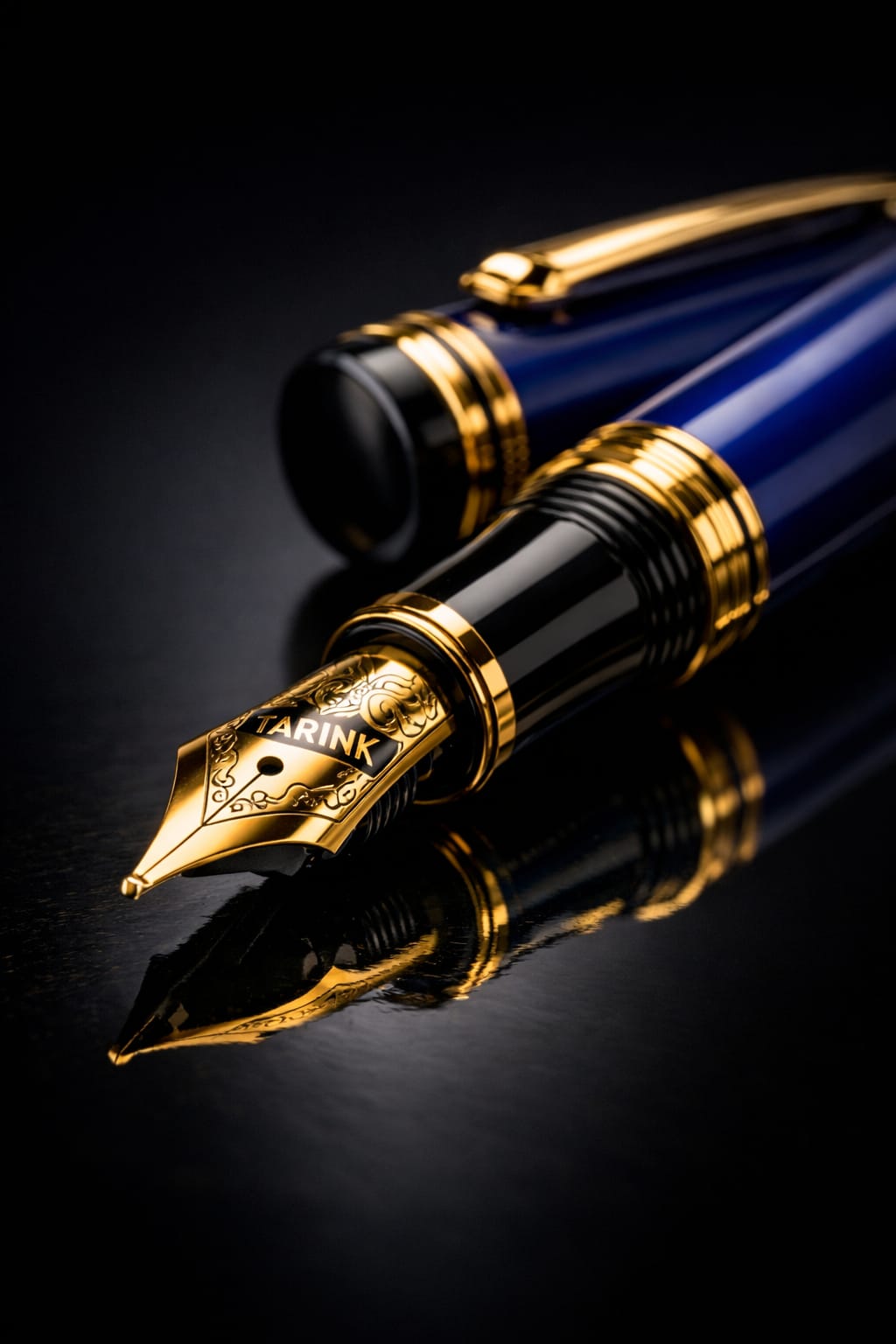
A fountain pen is a reusable writing instrument that uses liquid ink delivered through a nib onto paper. Unlike ballpoint pens that rely on thick oil-based ink and pressure, a fountain pen uses water-based ink and gravity-assisted flow, allowing smooth, effortless writing with minimal hand pressure.
A typical fountain pen consists of several important parts: the nib (the metal tip that touches the paper), the feed (which controls ink flow), the ink reservoir (cartridge, converter, or barrel), and the body or barrel that holds everything together. The nib is usually made of stainless steel or gold and comes in different sizes such as fine, medium, or broad, which affect the thickness of your writing.
The history of the fountain pen dates back to the 19th century, when inventors began developing pens that could store ink internally. One of the major breakthroughs came with companies like Waterman, which improved ink flow systems and made fountain pens practical for everyday use. Over time, iconic brands such as Parker and Montblanc helped establish fountain pens as symbols of elegance and professionalism.
Today, fountain pens are popular among students, professionals, calligraphy artists, and writing enthusiasts. Many people prefer them because they:
Provide smoother and more comfortable writing;
Improve handwriting quality;
Reduce hand fatigue during long writing sessions;
Offer eco-friendly, refillable ink options;
Deliver a premium and classy writing experience.
Fountain pens can be filled in three common ways:
Ink cartridges (pre-filled and easy to replace);
Converters (refillable from ink bottles);
Eyedropper filling (direct ink filling into the barrel).
Unlike disposable pens, fountain pens are designed to last for years with proper care and cleaning. Regular maintenance ensures consistent ink flow and long-term performance.
In the modern digital age, fountain pens remain relevant not just as writing tools but as personal style statements. Whether used for exams, journaling, signatures, or corporate gifting, they represent craftsmanship, tradition, and attention to detail.
If you are looking for a writing instrument that combines comfort, elegance, and durability, a fountain pen is more than just a pen — it is an experience.