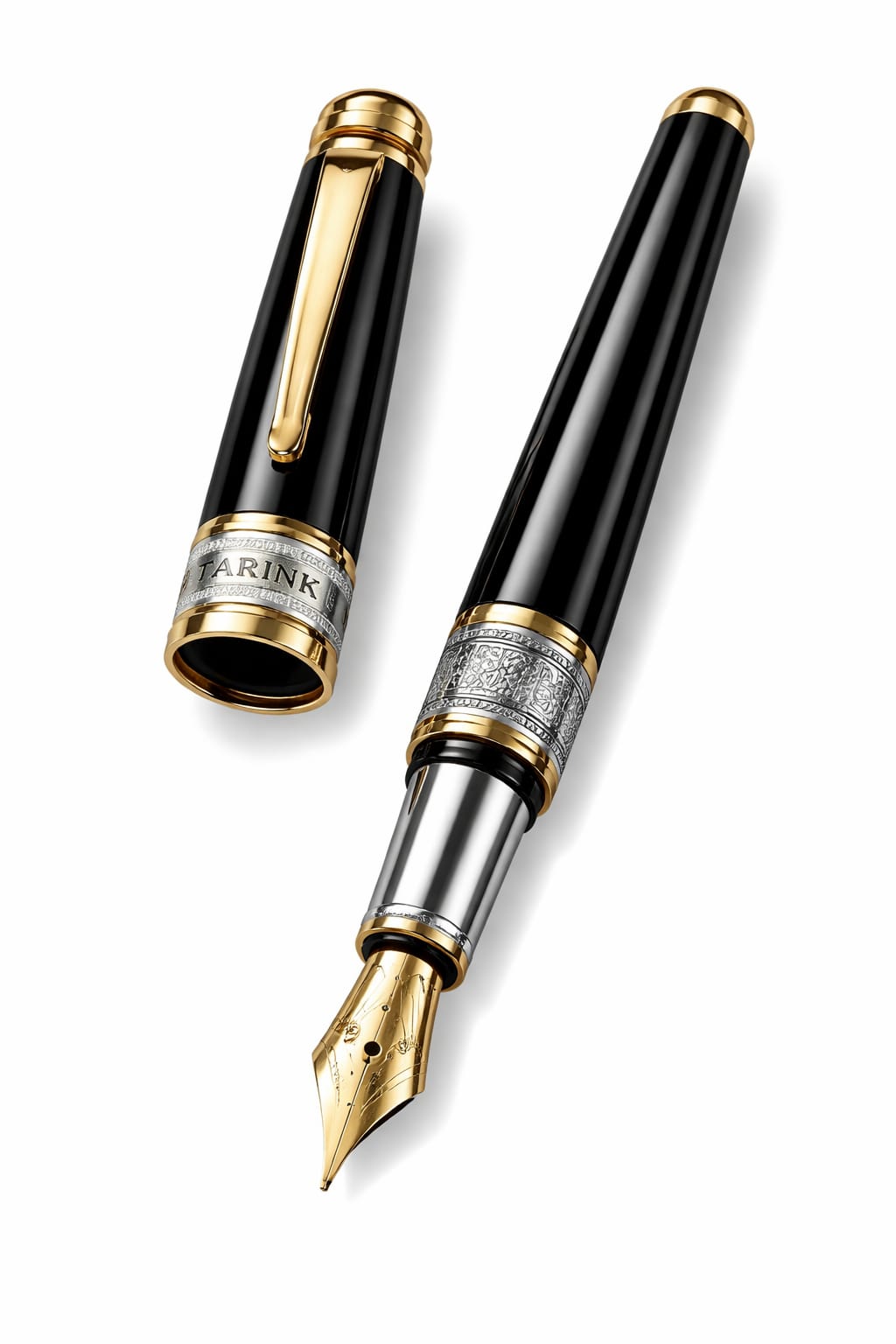
Understanding the parts of a fountain pen is essential for anyone who wants smooth writing performance, proper maintenance, and long-term durability. Whether you are a student, professional, or fountain pen enthusiast, knowing how each component works helps you choose the right pen and use it correctly.
1. Nib – The Heart of the Fountain Pen
The nib is the metal tip of the fountain pen that touches the paper and delivers ink. It is usually made of stainless steel or gold and comes in different sizes such as Extra Fine (EF), Fine (F), Medium (M), and Broad (B). The size of the nib determines the thickness of your writing line. A fine nib produces thin lines ideal for small handwriting, while a broad nib creates thicker, smoother strokes. The slit in the center of the nib controls ink flow, allowing ink to move smoothly onto the paper without requiring pressure.
2. Feed – The Ink Flow Controller
Located directly beneath the nib, the feed is a black plastic or ebonite component with tiny channels. Its main function is to regulate ink flow from the ink reservoir to the nib. The feed ensures a balanced flow of ink while also allowing air to move back into the pen to prevent leakage. If a fountain pen skips or writes dry, the issue often relates to the feed system.
3. Converter – The Refillable Ink System
A converter is a refillable ink reservoir that allows users to draw ink from a bottle instead of using disposable cartridges. It works like a small piston or twist mechanism that pulls ink into the pen. Converters are eco-friendly and cost-effective in the long run because they let you use a wide variety of bottled inks. Many well-known brands such as Parker and Waterman provide compatible converters for their fountain pens.
4. Barrel – The Main Body of the Pen
The barrel is the main body that holds the ink system (cartridge or converter). It protects the internal components and provides grip and balance while writing. Barrels are made from plastic, resin, metal, or even premium materials like lacquer or precious metals. The weight and design of the barrel significantly affect writing comfort and overall feel.
Why Understanding Fountain Pen Parts Matters
Knowing the different parts of a fountain pen helps you maintain it properly, troubleshoot ink flow issues, and choose the right model based on your writing needs. Each component — from the nib to the barrel — plays a crucial role in delivering a smooth, consistent, and elegant writing experience.
A fountain pen is more than just a writing instrument; it is a carefully engineered tool where every part works together to create effortless ink flow and refined handwriting.